



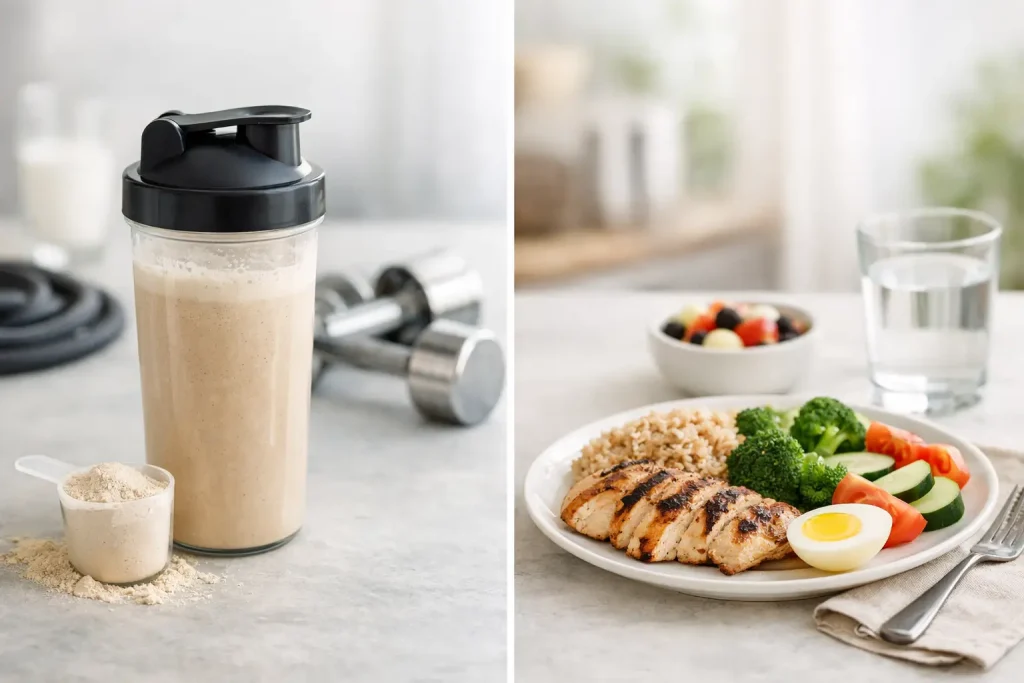
That 3 p.m. question matters more than most people realize: should you mix a protein shake, or do you actually need a meal replacement? In the protein shake versus meal replacement debate, the right choice depends less on marketing claims and more on what your body is missing at that moment – extra protein, full nutrition, better appetite control, or simple convenience.
Many people use these terms as if they mean the same thing. They do not. A protein shake is usually designed to increase protein intake. A meal replacement is meant to stand in for a meal by providing a broader mix of nutrients, calories, and satiety. They may both come in powder form and both fit into a shaker bottle, but their purpose is different.
Protein Shake Versus Meal Replacement: The Core Difference
A protein shake is centered on one main job: delivering protein efficiently. It may also include small amounts of fats, carbohydrates, fiber, vitamins, or functional ingredients, but protein is the headline. This makes it useful for people who already eat regular meals yet need more protein support for muscle maintenance, recovery, fullness, or daily nutrition.
A meal replacement is built to do more. Instead of focusing mainly on protein, it aims to provide a more balanced nutritional profile similar to a light meal. That usually means protein plus carbohydrates, fats, fiber, and a wider spread of vitamins and minerals. The goal is not only to help with intake of one nutrient, but to cover multiple needs when a full meal is not practical.
This is where confusion starts. Some modern protein powders now include added vitamins, greens, fiber, or targeted wellness ingredients. That can make them feel more complete than older, basic gym-style formulas. Even so, having a few added nutrients does not automatically turn a protein shake into a true meal replacement.
When a Protein Shake Makes More Sense
A protein shake is often the better option when your meals are mostly in place, but your protein intake is not. This is common among busy professionals who skip breakfast protein, parents who eat irregularly, older adults who need easier-to-digest options, and plant-based eaters who want a practical source of daily protein.
It can also be the better fit if you want something lighter. Many people do not want the heavier feeling of a meal replacement between meals or after exercise. They simply want a low-calorie way to stay fuller, support muscle maintenance, and avoid reaching for sugary snacks. In that situation, a protein shake can be more precise.
Quality matters here. A well-formulated plant-based protein blend can offer more than just grams of protein. It may support daily wellness with ingredients chosen for digestion, skin, joints, weight management, or general nutritional support. That kind of formula works well for people who want targeted benefits without the calorie load of a full meal.
When a Meal Replacement Is the Better Choice
A meal replacement is more suitable when you are not just missing protein – you are missing the meal itself. If breakfast is routinely skipped, lunch happens at your desk, or travel disrupts your normal routine, a meal replacement can help fill that gap more effectively than a standard protein shake.
The biggest advantage is coverage. A balanced meal replacement can provide energy from carbohydrates, satiety from fiber and fats, and micronutrients that support daily function. It is often a better choice for someone trying to avoid the cycle of having a very light drink and then feeling hungry again an hour later.
That said, not every meal replacement is equally balanced. Some are high in sugar, some are low in protein, and some rely heavily on synthetic ingredients without much thought to digestibility or ingredient quality. If a product is supposed to replace a meal, it should do so with enough nutritional substance to feel supportive, not just convenient.
The Nutrition Label Tells the Real Story
If you want to choose well, the front of the package is not enough. The nutrition panel and ingredient list tell you whether you are buying a protein supplement or a meal substitute.
Start with protein. If the product provides a strong protein serving but relatively low calories and minimal carbs and fats, it is likely a protein shake. If calories are higher and there is a more balanced spread of macronutrients, it is probably moving into meal replacement territory.
Then look at fiber. This is one of the simplest clues. Meal replacements usually need meaningful fiber to help with fullness and digestive support. Many protein shakes contain little or none. Fiber is not everything, but it affects whether a drink feels satisfying or temporary.
Micronutrients matter too. A meal replacement should offer a broader spectrum of vitamins and minerals. A protein shake may include selected nutrients or functional compounds, which can be valuable, but that still serves a different purpose from replacing the nutritional role of breakfast or lunch.
Finally, check ingredient quality. For many health-conscious adults, the question is not only how much protein a product contains, but also where that protein comes from, how easy it is to digest, and whether the formula aligns with preferences such as plant-based, non-GM, or low-calorie nutrition.
Protein Shake Versus Meal Replacement for Weight Goals
This is one area where people often choose the wrong product for the right reason.
If your goal is weight management, a protein shake can help by increasing fullness and reducing the urge to snack, especially when your meals are already fairly balanced. Higher protein intake can support muscle retention during calorie control, which is useful for long-term body composition.
But if you are replacing a meal, a very lean protein shake may leave you underfed and more likely to overeat later. In that case, a meal replacement may work better because it gives more complete nourishment and steadier energy.
The trade-off is calorie control. Some meal replacements are more filling, but they can also be more calorie-dense than expected. Some protein shakes are lighter, but they may not satisfy hunger for long. The best option depends on whether you need a snack-level solution, a post-workout protein source, or a realistic stand-in for lunch.
What About Plant-Based Formulas?
Plant-based options have changed this category significantly. In the past, many consumers assumed plant protein meant lower quality or poor texture. Today, blended sources such as soy, pea, wheat, and pumpkin seed can create a more complete amino acid profile and a smoother experience.
This matters in both categories. A plant-based protein shake can support daily protein needs while staying lighter and easier to fit into a routine. A plant-based meal replacement can offer a practical option for people avoiding dairy, managing digestive sensitivity, or looking for a cleaner daily nutrition solution.
For many consumers, the added value comes from functional formulation. A product that combines protein with ingredients chosen for skin health, joint support, antioxidant support, or healthy weight management can better match real-life wellness goals. That is especially appealing to people who are not training for performance, but are trying to stay consistent with everyday health.
How to Choose Based on Your Day
Think about the role the product needs to play.
If you had breakfast and lunch but want something satisfying before dinner, a protein shake may be enough. If you are rushing out the door and breakfast is not happening otherwise, a meal replacement is usually the smarter choice. If you just finished exercise and want protein support without a heavy stomach, a protein shake often fits better. If you know you will be stuck in meetings and unable to eat a proper lunch, a meal replacement gives broader support.
This is also where product quality becomes practical, not just technical. A formula that uses quality plant proteins, keeps calories reasonable, and adds targeted wellness ingredients can serve as a strong daily support option. Brands such as Nuewee have helped make this category more useful for ordinary health routines, not just gym-focused use.
There is no need to force one product to do the other product’s job. A protein shake does not have to replace lunch to be effective. A meal replacement does not need bodybuilder-level protein to be useful. The better question is simple: what do you need right now – more protein, or more complete nourishment?
When you answer that honestly, the best choice becomes much easier, and your nutrition routine becomes easier to maintain.