



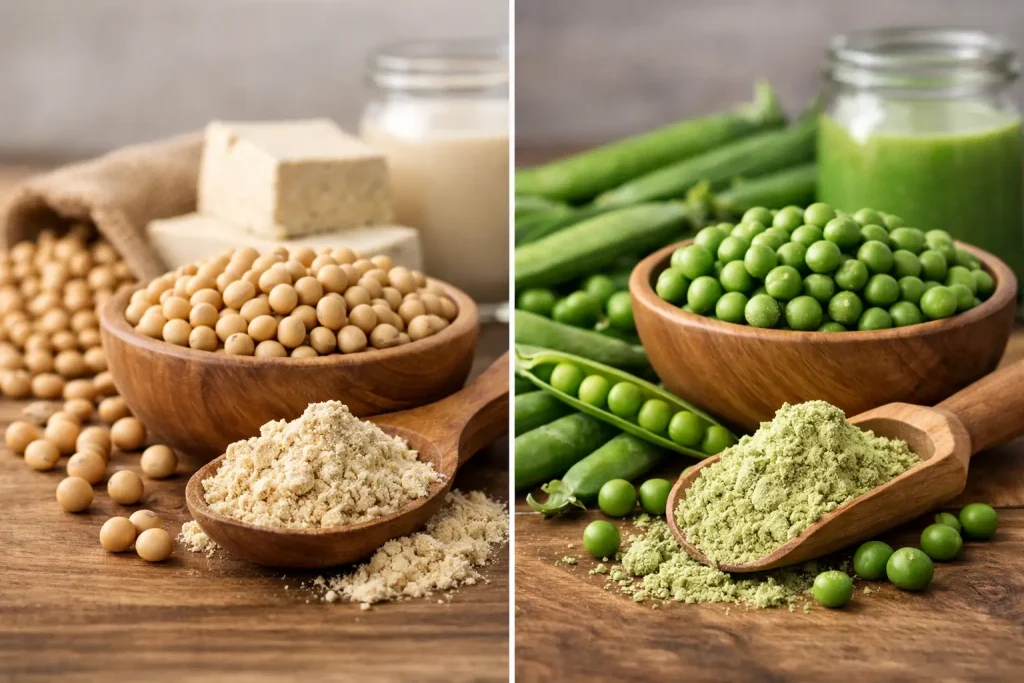
If you have ever stood in front of a protein shelf wondering about soy protein vs pea, you are not alone. Both are popular plant-based options, both can support daily nutrition, and both can work well in shakes, smoothies, and functional formulas. The better choice depends less on hype and more on your body, your goals, and how you want protein to fit into everyday life.
Soy protein vs pea at a glance
Soy protein and pea protein are often grouped together because they are both convenient, dairy-free ways to increase protein intake. But they are not identical in nutrition, texture, or how they fit different lifestyles.
Soy protein is made from soybeans and is known for being a complete protein, meaning it contains all nine essential amino acids. Pea protein is usually made from yellow peas and is also rich in protein, especially branched-chain amino acids, but it is slightly lower in certain essential amino acids such as methionine. In practical terms, both can support muscle maintenance, satiety, and general wellness when used as part of a balanced diet.
For many adults, the real decision comes down to digestibility, allergies, taste preference, and whether they want a single-source protein or a blend designed for broader nutritional support.
Protein quality and amino acids
One reason soy protein has long been considered a strong option is its amino acid profile. It is one of the few plant proteins classified as complete on its own. That matters if you want efficient protein support without needing to think too much about combining foods across the day.
Pea protein performs well too, especially for people focused on everyday protein intake, weight management, or post-workout support. It is particularly rich in leucine, which plays an important role in muscle protein synthesis. Still, it is not usually considered as balanced as soy on its own.
This is where formulation matters. A thoughtfully designed plant protein blend can help balance amino acids while improving texture and usability. For people who want more than basic protein, blends may also pair protein with functional ingredients that support skin, joints, energy, or other wellness goals.
Digestion and comfort
Digestibility is where personal experience matters more than labels. Some people do very well with soy protein and find it smooth, filling, and easy to use daily. Others feel better with pea protein, especially if they are sensitive to soy foods or simply prefer a lighter feel.
Pea protein is often described as gentler for those with common soy concerns, although it can have a slightly earthier taste. Soy protein usually has a cleaner amino acid profile, but for some users it may feel heavier depending on the formulation, serving size, and what it is mixed with.
If you have a sensitive stomach, it helps to look beyond the protein source itself. Sweeteners, gums, flavor systems, and added functional ingredients can all affect digestion. A high-quality product with clean sourcing, sensible formulation, and tested manufacturing standards often makes a bigger difference than the headline protein alone.
Allergies, sensitivities, and dietary preferences
This is one of the clearest differences in the soy protein vs pea discussion. Soy is a common allergen. For that reason alone, pea protein may be the easier and safer option for some households.
Pea protein also appeals to consumers who prefer to avoid soy for personal or dietary reasons. That may include people who want a simpler rotation of plant proteins or who are trying to reduce exposure to foods they eat frequently.
On the other hand, soy has a long history in nutrition and can absolutely fit a healthy diet for many adults. Whole soy foods and quality soy protein products can be practical, nutrient-dense choices. The key is tolerance, preference, and confidence in the product’s sourcing and quality controls.
Taste, texture, and everyday use
Nutrition matters, but consistency matters too. If you do not enjoy the taste or texture, you are less likely to use a protein powder regularly.
Soy protein tends to mix into a smoother, creamier drink. That makes it appealing for shakes and for people who want a more milk-like texture. Pea protein can be thicker or slightly grainier depending on the processing method and flavor system, though many newer formulas are far improved from older versions.
If you add protein to oatmeal, smoothies, pancakes, or coffee-based drinks, texture can change the experience. Soy often blends more easily into soft, neutral recipes. Pea can work very well in stronger flavors like cocoa, coffee, banana, or spiced blends where its natural taste is less noticeable.
For busy adults, convenience is part of wellness. The best protein is one you can prepare quickly, enjoy daily, and trust as part of your routine.
Fitness goals, weight management, and general wellness
Both soy and pea protein can support muscle maintenance, exercise recovery, and fullness between meals. If your goal is body composition or weight control, either can help when used to increase protein intake without adding too many calories.
Soy may be appealing if you want a complete plant protein in a single source. Pea may be appealing if you want a soy-free option that still offers strong support for satiety and muscle recovery. Neither is automatically better for everyone.
For mainstream wellness consumers, protein is not just about the gym. It can help support energy, maintain lean mass during weight loss, and make breakfast or afternoon snacks more satisfying. Parents, professionals, and adults with busy schedules often benefit from protein powders because they reduce the gap between ideal nutrition and real life.
That is also why functional protein formulas are gaining attention. A protein powder that supports daily intake while also targeting skin health, joint comfort, or overall nutritional balance can be more useful than a basic one-dimensional product.
What about hormones and soy concerns?
Soy questions come up often, usually around phytoestrogens. This topic is easy to oversimplify. Soy contains isoflavones, which are plant compounds that interact differently from human estrogen. For most healthy adults, moderate soy intake through foods or standard protein products is generally considered acceptable.
That said, some consumers still prefer to avoid soy because of personal comfort, medical guidance, or simply wanting fewer variables in their diet. That preference is valid. Wellness works best when it feels sustainable and reassuring.
If you have a specific medical condition, hormone-related concern, thyroid issue, or are following a clinician-directed eating plan, it is wise to ask your healthcare professional which protein source best fits your needs.
How to choose between soy protein and pea protein
A practical choice starts with your priority. If you want a complete protein with a smooth texture, soy may be a very good fit. If you want a soy-free option that still supports fullness and everyday plant-based nutrition, pea may be the better choice.
You should also consider what else is in the formula. A quality protein product should not rely only on protein quantity. Look for non-GM sourcing when possible, transparent ingredient choices, and quality assurance standards that reflect safe manufacturing. Certifications such as Halal, GMP, HACCP, and other recognized approvals can provide extra confidence, especially when you plan to use a supplement daily.
It also helps to think beyond the label claim. Are you using protein after exercise, as a meal support tool, or to help fill nutritional gaps during a busy week? Are you sensitive to certain ingredients? Do you want a low-calorie formula or one that includes targeted wellness ingredients? Those questions often lead to a better decision than comparing grams of protein alone.
When a blend may be the smarter option
Sometimes the answer is not soy or pea. It is soy and pea, or a broader plant blend designed to balance strengths. Combining plant proteins can improve amino acid coverage, texture, and usability. It can also create room for functional ingredients that support specific health goals.
For consumers who want convenience and purpose in one scoop, this approach often makes sense. A well-formulated blend can support daily protein needs while also aligning with goals like beauty nutrition, joint support, eye health, or weight management. That is especially relevant for adults who are not training like athletes but still want practical, dependable nutrition.
At Nuewee, this kind of functional thinking is part of the value of plant-based protein. Protein does not have to be isolated from the rest of your wellness routine. It can be part of a smarter daily formula built around real-life needs.
The better protein is the one you can use consistently
The soy protein vs pea question has no universal winner. Soy offers complete protein and a smooth profile. Pea offers flexibility, broad appeal, and a soy-free option that works well for many adults. Both can earn a place in a healthy routine when quality, tolerance, and daily habits are considered together.
If you are choosing for long-term wellness, trust your body, your lifestyle, and the quality of the formula in front of you. The right protein should feel easy to use, easy to tolerate, and aligned with the health goals you care about most.