



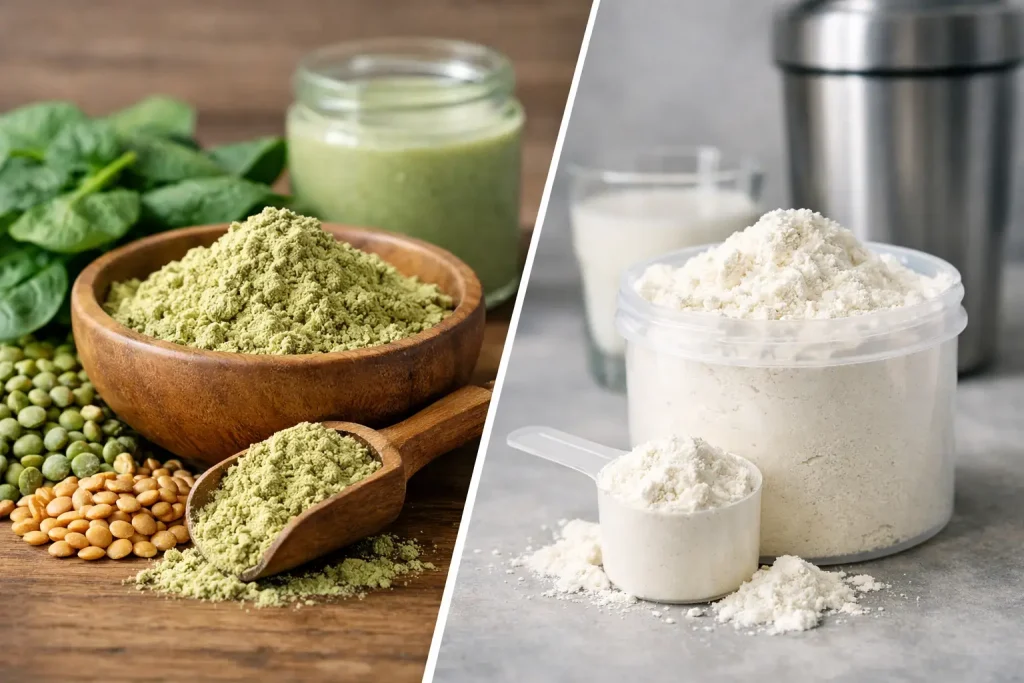
That post-workout scoop can look almost identical on the shelf, but what is inside the tub can feel very different in your daily routine. When people compare plant protein vs whey, they are usually not just asking which one builds muscle better. They are also asking which one feels lighter, fits their diet, supports their health goals, and works consistently in real life.
For many adults, protein powder is no longer just a gym product. It has become a practical way to support satiety, maintain muscle, fill nutrition gaps, and make busy days more manageable. That is why the better question is not which protein is universally superior. It is which one suits your body, preferences, and long-term wellness plan.
Plant protein vs whey: the real difference
Whey protein comes from milk. It is a dairy-derived protein that is separated during the cheese-making process and then refined into powder. Because it is rich in essential amino acids and naturally high in leucine, whey has long been popular in sports nutrition.
Plant protein, by contrast, can come from sources such as pea, soy, rice, wheat, hemp, or pumpkin seed. Some plant-based powders use a single source, while others combine several proteins to create a more balanced amino acid profile. That blending approach matters because different plants bring different strengths.
On paper, whey is often praised for its complete amino acid profile and fast absorption. Plant protein is often valued for being dairy-free, easier to fit into restricted diets, and more aligned with broader wellness preferences. In practice, both can support muscle maintenance and daily protein intake when used well.
Muscle support is not the only thing that matters
If your only goal is maximizing muscle protein synthesis as efficiently as possible after intense training, whey does have an advantage in terms of leucine content and research history. It is a strong option for athletes who tolerate dairy well and want a straightforward, fast-digesting protein source.
But that does not mean plant protein is second-rate. A well-formulated plant blend can still support recovery, lean muscle maintenance, and everyday strength goals, especially when total daily protein intake is adequate. For many people, consistency matters more than theoretical perfection. A protein powder you enjoy, digest comfortably, and use every day often serves you better than one with a slight technical edge that leaves you bloated or skipped in the cabinet.
This matters even more for adults focused on preventive wellness rather than bodybuilding. If your goal is healthy aging, balanced nutrition, weight management, or replacing a less nutritious snack, then digestion, calorie control, and ingredient quality may matter just as much as amino acid speed.
Digestion often decides the winner
One of the biggest differences in plant protein vs whey comes down to how your body responds after drinking it. Whey can be a good fit for people who digest dairy comfortably. For others, it may lead to bloating, heaviness, gas, or stomach discomfort, especially if there is lactose sensitivity.
Plant protein is often the easier route for people who want to avoid dairy or feel better on lighter formulas. That does not mean every plant protein is automatically gentle. Texture, sweeteners, gums, and the protein source itself all affect tolerance. Still, many people find that a clean plant blend fits better into daily life, especially when taken in the morning, between meals, or during busy workdays.
This is where ingredient design becomes more important than category labels. A thoughtfully formulated plant protein with complementary ingredients can feel less like a sports supplement and more like a functional daily nutrition tool.
Quality depends on formulation, not hype
It is easy to reduce the conversation to animal versus plant, but the real quality test is broader. You want to know how much protein you are actually getting per serving, whether the product uses meaningful ingredients, how much sugar it contains, and whether the brand takes safety and sourcing seriously.
A low-quality whey powder is still a low-quality product. The same is true for plant protein. Some powders are overloaded with fillers, artificial flavors, or excessive sweeteners. Others are built with a more careful approach, using non-GM ingredients, quality-controlled manufacturing, and targeted formulations that support specific health goals beyond protein alone.
For health-conscious adults, that broader view is often more useful than obsessing over a single nutrient metric. Protein does not have to work alone. Depending on your needs, it may make sense to choose a formula that also supports skin, joints, weight control, or general nutrient intake.
When plant protein may be the better choice
Plant protein tends to make the most sense if you follow a plant-based lifestyle, avoid dairy, prefer lower-calorie options, or want a protein powder that feels more aligned with daily wellness than gym culture. It can also be a strong choice if you are looking for added functional ingredients that support concerns such as beauty nutrition, digestive comfort, or healthy aging.
Blended plant formulas are especially useful because they can improve amino acid balance while offering a more rounded nutritional profile. Ingredients like pea, soy, wheat, and pumpkin seed each contribute something different. Together, they can create a more complete and practical protein solution for people who want both convenience and versatility.
This is one reason many wellness-focused consumers are moving toward plant-based functional protein. They are not only thinking about post-workout recovery. They are thinking about daily energy, calorie awareness, ingredient familiarity, and whether a supplement fits a sustainable routine.
When whey may still be the right pick
Whey remains a strong choice for people who want a classic protein option with extensive sports nutrition backing and who digest dairy without issue. If you are highly active, focused on performance, or simply prefer the taste and texture of whey, there is no reason to dismiss it.
It can also be convenient for those who want a simple product without additional wellness ingredients. Some people do best when they keep supplementation basic and separate, using one powder for protein and other products for specific concerns.
That said, whey is not automatically a better fit just because it has been mainstream for longer. If it clashes with your digestion, dietary preferences, or long-term habits, its strengths become less meaningful.
How to choose between plant protein vs whey
Start with your body, not the marketing. If dairy regularly causes discomfort, whey is probably not the most practical option. If you feel good with dairy and want a traditional workout-focused protein, whey may work well.
Next, think about your actual goal. If you are trying to support muscle gain from intense training, whey may offer a slight advantage. If your goal is broader wellness, better satiety, convenient breakfast support, or a low-calorie nutrition boost, a plant protein blend may be more useful.
Then look at the label with care. Check the protein amount per serving, sugar content, ingredient quality, and any added compounds. A product with functional ingredients may offer more value if it aligns with a specific need, such as skin support, joint comfort, or weight management. This is where brands like Nuewee have helped reshape the category by showing that protein powder can do more than fill a macro target.
Finally, be realistic about consistency. The best protein powder is the one you will actually use. Taste, texture, digestibility, and convenience matter because they shape adherence over time.
A smarter way to think about protein
The conversation around protein is changing. More consumers now want clean-label options, trusted certifications, non-GM sourcing, and formulas that fit modern health concerns. They also want products that feel approachable, not extreme.
That shift makes plant protein increasingly relevant, especially for people who are not chasing elite athletic outcomes but still want to protect muscle, support healthy weight, and nourish their bodies well. Whey still has a place. It just no longer owns the entire conversation.
The most useful choice is the one that supports your body comfortably and fits your routine without friction. If your protein works with your lifestyle, not against it, you are much more likely to keep showing up for your health.