



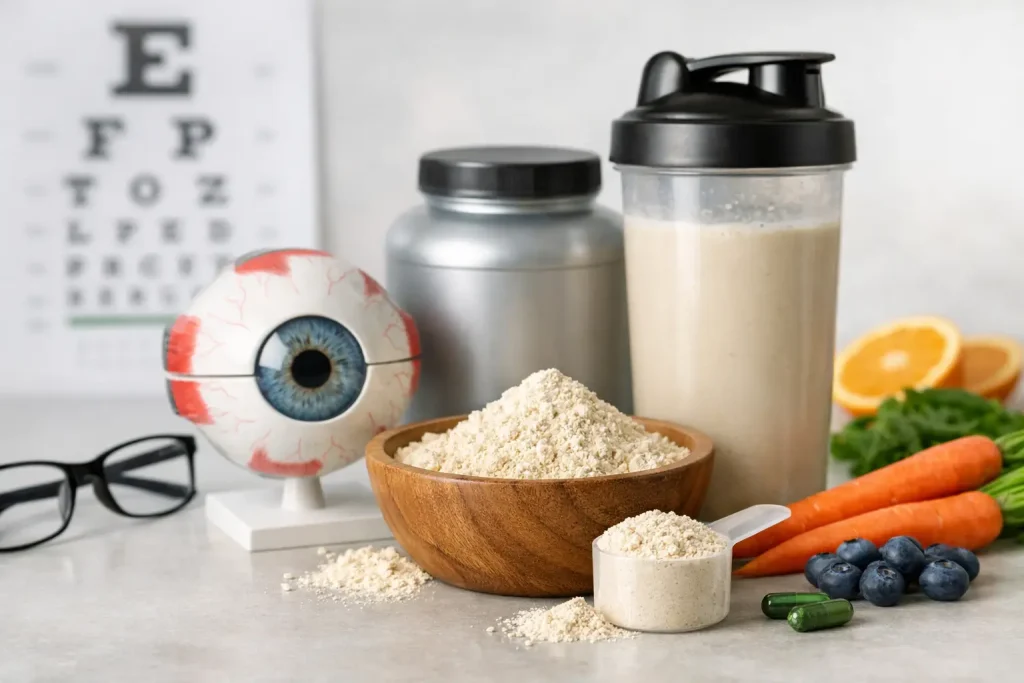
Screens, long workdays, and uneven eating habits can leave many adults thinking about their eyes only when discomfort shows up. That is why interest in eye health protein powder is growing. It offers a practical way to combine everyday protein intake with targeted nutrients that may help support visual wellness, especially for people who want something convenient, plant-based, and easy to use.
What eye health protein powder is meant to do
At its core, eye health protein powder is a functional supplement. It is not just a protein shake with a new label. The idea is to pair protein, which supports daily nourishment and satiety, with ingredients commonly associated with eye support, such as carotenoids, antioxidants, and plant compounds.
This matters because eye health is not usually supported by one nutrient alone. Your eyes rely on a broader nutritional pattern that includes adequate protein, vitamins, healthy fats, and antioxidant compounds. A powder format can help fill gaps, but it works best as part of a consistent routine rather than a quick fix.
For busy adults, that combination can be appealing. Instead of adding another capsule or another complicated regimen, a functional powder folds eye-focused ingredients into something you may already use after a workout, between meetings, or as part of breakfast.
Why protein belongs in an eye wellness conversation
People often connect protein with muscle recovery and weight management, but protein has a wider role in the body. It contributes to the maintenance and repair of tissues and supports general nutritional adequacy. If your diet is inconsistent, getting enough protein can be one of the first things to slip.
That does not mean protein alone directly transforms eye health. The more accurate view is that protein provides a strong nutritional base. When a product combines quality protein with targeted ingredients such as astaxanthin or plant antioxidants, it becomes more relevant for people looking for everyday wellness support beyond fitness.
This is also where plant-based formulas can stand out. Many consumers want lower-calorie, easy-to-digest options that fit modern schedules and dietary preferences. A well-formulated powder can support fullness, simplify daily intake, and deliver additional nutrients without feeling like a separate health task.
Which ingredients make an eye health protein powder more meaningful
Not every formula marketed for eyes is equally useful. The ingredient story matters more than the front label. If a product is built around eye support, the supporting compounds should make sense nutritionally.
Carotenoids and antioxidant support
Astaxanthin is one of the better-known ingredients in this space. It is a carotenoid with antioxidant properties and is often used in wellness products aimed at visual comfort and protection against oxidative stress. For adults who spend hours on digital devices, this can be especially relevant.
Other antioxidant-rich ingredients may also play a role, depending on the formula. The benefit here is not that antioxidants promise a dramatic overnight change. It is that they may help support the body’s normal defense systems, which is useful when eye tissues are regularly exposed to environmental and lifestyle stressors.
Protein quality and digestibility
The protein blend still matters. A powder can include eye-support ingredients, but if the protein source is low quality, overly heavy, or difficult to digest, daily use becomes harder to maintain. Plant proteins such as pea, soy, pumpkin seed, and wheat can work well when blended properly for texture, amino acid balance, and drinkability.
Consistency is what makes any supplement helpful. If a powder tastes unpleasant or feels too thick, most people stop using it. That is a practical issue, but it directly affects results because the most advanced formulation does little if it sits in the cabinet.
Clean sourcing and product quality
Safety and quality assurance are especially important in functional nutrition. Consumers looking for condition-specific support usually want more than a trendy ingredient list. They want to know the product is made with care, supported by quality standards, and suitable for regular use.
That is why factors such as non-GM sourcing, manufacturing controls, and recognized certifications matter. They do not replace nutritional value, but they do build confidence in the product category.
Who may benefit from eye health protein powder
This type of supplement is usually a good fit for adults who want convenience with a clear health purpose. Working professionals who spend long hours in front of monitors are an obvious group. Parents with busy schedules may also appreciate a quick nutritional option that feels more targeted than a standard snack.
It can also make sense for people who struggle to maintain balanced meals every day. If breakfast is often skipped or lunch is rushed, a functional protein powder may help cover basic nutrition while adding eye-supportive compounds. Plant-based eaters and those who prefer lighter, lower-calorie supplementation may find it especially practical.
Still, it depends on your needs. If your diet is already rich in protein and eye-supportive nutrients, a specialty powder may be less essential. In that case, it becomes a convenience product rather than a major nutritional upgrade.
What eye health protein powder cannot do
This is where realistic expectations matter. Eye health protein powder is not a treatment for eye disease, and it should not replace professional care. If you have persistent vision changes, severe dryness, pain, or diagnosed eye conditions, a supplement is not the first step.
It also cannot compensate for every lifestyle factor. Poor sleep, constant screen strain, smoking, dehydration, and a low-quality diet all affect eye comfort and overall wellness. A good powder can support your routine, but it does not erase the effects of daily habits.
That is not a weakness of the product category. It is simply the truth about nutrition. Functional foods are usually most effective when they reinforce healthy choices rather than attempt to override unhealthy ones.
How to choose the right eye health protein powder
A smart choice starts with the formulation, not the marketing claim. Look for a product that clearly combines quality protein with recognized eye-support ingredients, and avoid formulas that use tiny amounts of trendy compounds just for label appeal.
You should also think about fit. If you want a shake that doubles as a light breakfast or afternoon support, taste and texture matter almost as much as the ingredient panel. If you are sensitive to calories, sugar, or certain protein sources, that should guide your decision too.
For many consumers, the best option is one that balances several strengths at once: plant-based protein, targeted ingredients like astaxanthin, easy mixing, and dependable manufacturing standards. That kind of formula is better suited to real daily use. Brands such as Nuewee have helped shape interest in this category by combining plant-based protein with wellness-focused ingredients in a more accessible format.
How to use it in a daily routine
The easiest way to use eye health protein powder is to attach it to a habit you already have. Mixing it into breakfast, using it as a mid-morning shake, or keeping it for the afternoon energy slump tends to work better than treating it as an occasional health extra.
It can be mixed with water for a lighter option or blended with plant milk for a more filling drink. Some people also add it to smoothies with fruit, oats, or seeds. That said, if the powder already includes a carefully balanced formula, adding too many extras may change calorie intake more than expected.
Routine matters more than timing perfection. There is no single ideal hour to take it. What matters is using it consistently enough that both the protein and the supportive nutrients become part of your normal nutrition pattern.
The bigger picture for visual wellness
Eye support is becoming part of a broader conversation about preventive health. People do not just want products for appearance, weight, or exercise performance anymore. They want daily nutrition that reflects how they actually live – at desks, on phones, in cars, under stress, and often with less dietary balance than they would like.
That is why eye-focused functional powders resonate. They speak to a real need for convenience, but they also reflect a more mature view of wellness. Health is not always about dramatic interventions. Often, it is about choosing products that help you stay more consistent with the basics while adding targeted support where modern life creates extra strain.
If an eye health protein powder is built well, used regularly, and paired with good habits, it can be a practical part of that approach. The best results usually come from small, steady choices that make healthy nutrition easier to keep up with tomorrow, not just today.